Saturday, 1 October 2022

Intervention: Purposeful Perspective Taking - the planning

Describe in detail the intervention you designed to address the student learning problem i.e. exactly what did you plan to change? Be specific about actions, timelines etc.

After redesigned my inquiry, I wanted to think about opportunities to look at perspective taking as way of getting my kids to think critically about their learning. 

I wanted to design a series of lessons on the English Street names of our local area based on a 2016 Jubilee booklet put out by the G.I Business association.  Some of these names were featured in one of the art works we saw in G.I on our art tour.  I wanted kids to use images and photos to unpack and tell a story of what, where, when, who and how in our local area. 

Planning for the teaching:

I studied Aotearoa Histories Using Historical Images site to make sure that I was planning for the lessons correctly.  There were 2 good videos on the site that shared how other schools used images to guide the learning.


I then needed some scaffolding tools that could build the understanding of the images for students to better understand what they were looking at. The Manaiakalani Cybersmart Tools and Organisers have some really cool ones that break down the learning better and I thought I'd focus on one or two as a starter.  


Google maps was also another way to explore where images or events take place so I refreshed my mapping skills by thinking about how to use google maps for students to share their learning.


From these different resources, I developed the sequence of lessons under the title 'Leading Local Change in our Community'.  In my next blogpost, I will detail the lesson itself and reflect on how it went.

Tuesday, 20 September 2022

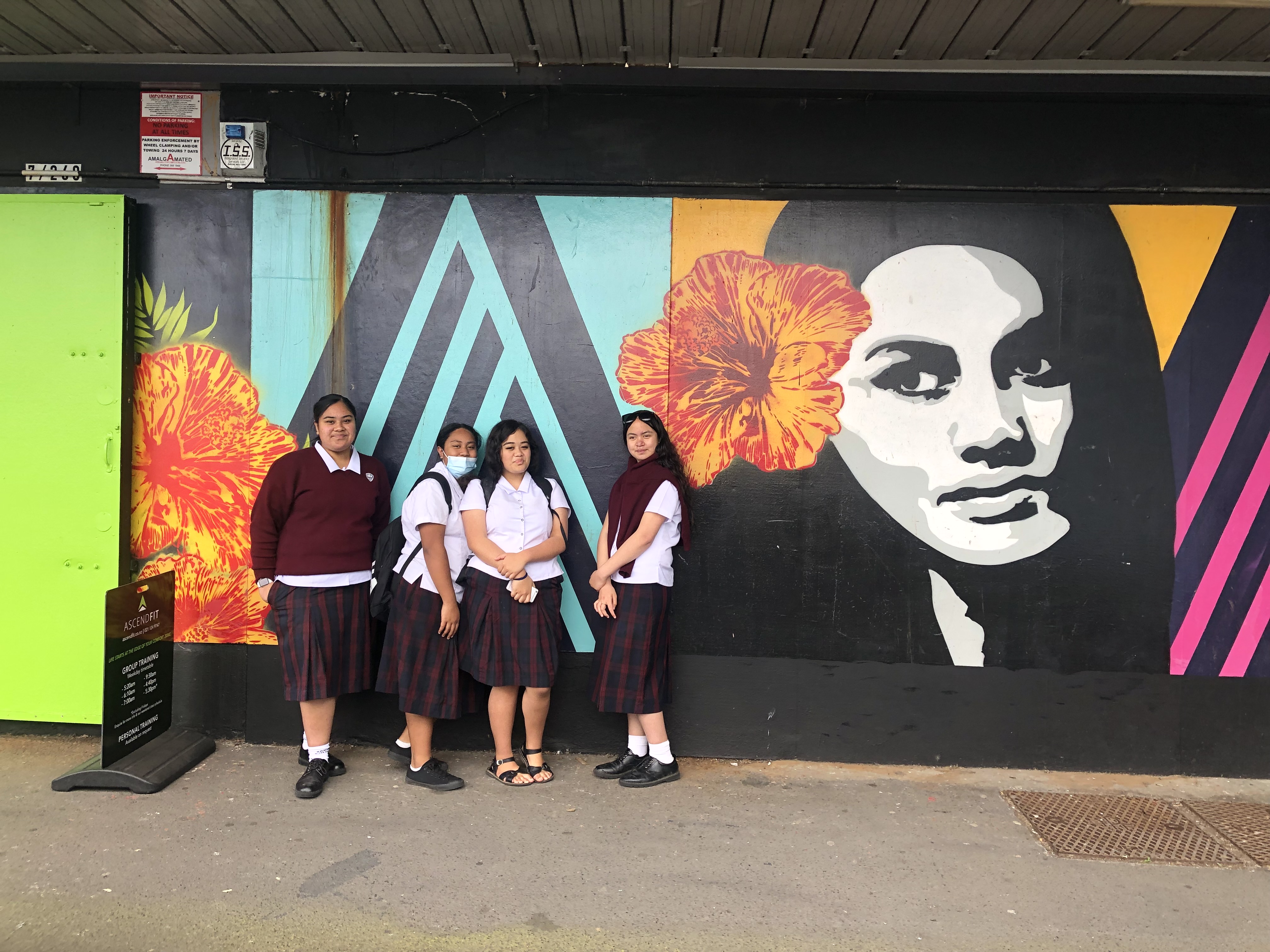
Year 9 Social Class Local Art Walking Tour

Making connections with our local community is important to build my students’ knowledge of what is important and who it is important too.  Many of my kids live in Glen Innes and walk or drive through the town centre but have never noticed the art work on the walls.  My year 9 Social Studies class were fortunate enough to be led on a walking art tour around the town centre to hear about who designed and created the art work and the reasons behind them.  Here is a short video of the tour. 


The kids asked lots of good questions and were positive about the experience.  They were given an opportunity to reflect and think about what that saw and what they did not see and how they felt about it.  From the students’ feedback, we are going to think about how to incorporate their thinking into action.  


Sunday, 11 September 2022

Leading Staff PLD: Navigating the Tapasā using the Kalaka Research Framework

As our school Professional Development Co-ordinator, I have the privilege of organising relevant PLD experiences related to our strategic goals.  At the start of our Tamaki Tongan Language week, it seemed only fitting that our Pasifika PLD team presented to staff a relevant programme on raising Pasifika Achievement.  Our School Goal Number# 2 is focused on understanding and demonstrating the cultural competencies of the Tapasā in raising Pasifika Achievement.  

Mele Suipi-Latu began by exploring a poem by Professor Konai Helu Thaman a well-known Pacific academic and explored the way the Kahoa, a Tongan flower garland, was intricately designed and put together for a specific purpose.   We explored the 3 stages of making a Kahoa and the distinct parallels educators can find in the process.  The details can be found in the presentation below.  A highlights video has also been created to share the experience.  The feedback from staff was really positive and we look forward to continuing the Tapasā journey.


Friday, 19 August 2022

My Casual Chain


"A causal chain is when a cause leads to an effect and that effect becomes the cause of another effect.  A leads to B. B leads to C. C leads to D.  Any intervention you design will (consciously or not) be based on a causal chain you have in mind - this is your theory of action."


Here is the link to my Casual Chain.


Thursday, 18 August 2022

Restating my inquiry

At the start of my inquiry, I wanted to engage and empower my year 9 Social Studies class to ‘care’ about their local community and local curriculum because I believed it was important for them to know.   Many of the kids, although born and raised in Glen Innes, don't really know about the history of the place especially Mana Whenua history, even though they may go past these places every day.  

As I gathered evidence through student voice, looking at student work, talking to other teachers and looking at their test results,  I could see that kids were still not really understanding the importance of our local history.  Much of what we did was still based in the classroom.  My beliefs about what was important to them, wasn't really matching to what I was expecting them to do.  Here, look at a map.  Can you see how far Mauninaina is?  Look at Maungarei, it's so high.  Yep, not enough.  I did some professional reading and developed some hunches and realised my inquiry needed to shift and change.What I found was that 'engaging' needed to be explored more than just taking part in or knowing.  It need to active and dynamic and authentic.  The concept of empowerment was also something that I needed to explore further.  What power were they gaining and who was it important to. 

I sat down and discussed my inquiry with 2 experts who helped me fine tune my inquiry to allow for a more specific and clear outcome.  I started with 'How will supporting students to authentically connect with their local area and community create a sense of pride and respect in their learning?' but realised that 'creating a sense of pride' was different for everyone and can't be measured.   So I've decided to rebrand my inquiry to look at: 

How will supporting students to authentically connect with their local community create a sense of belonging and provoke action for a sustainable future?

I am going to find more authentic stories/narratives to understand and share so that kids can hear a real person talk about a real place.  I am thinking about developing a short series of lessons on the local street names of streets in our areas as a start and utilise perspective taking to build critical thinking and learning for my kids.  Hopefully this would provoke action and help guide them in the future.


Saturday, 6 August 2022

#7: Testing out my Hypothesis part 2

 If students were connected to their learning then they would not less be distracted and more engaged.

  • Provide highly engaging relevant lessons with variety linked to what they know
  • Create enough down time to do their own work.
  • Let students select music which helps them to learn.
  • Offer opportunities to do group work and peer work as well as one to one.
  • Bring in experts who are engaging and relate to the learning.
Recently, one of our community activists and project based learning expert Karl Bailey came in to work with my year 9 class on design based thinking and learning.  My class has been one of the lucky few who were selected to help look at challenges facing young people in our community today and to think of ways to solve it.  

A few months ago, we started by getting the kids into groups and thinking about the challenge of attendance but we could see that kids weren't engaging with the context.  Karl and I brainstormed some ideas and discussed keeping it simple and engaging.  The class is made of mostly boys and asked them what they were interested in.  The majority said gaming, eating and sports.  So we decided to do a mini project whereby the kids in their groups had to design a new sport.  

Kids found it difficult to plan and figure out the pros and cons of the design.  They just wanted to get up and play it.  So it was interesting to see how kids responded and in the end, I could see they enjoyed the planning and process of the design and some of the ideas the kids had were really exciting.

Friday, 5 August 2022

#7: Testing out my Hypothesis part 1

If students were connected to their learning then they would not less be distracted and more engaged.

  • Provide highly engaging relevant lessons with variety linked to what they know
  • Create enough down time to do their own work.
  • Let students select music which helps them to learn.
  • Offer opportunities to do group work and peer work as well as one to one.
  • Bring in experts who are engaging and relate to the learning.

We have started our new year 9 Social Studies on 'Understanding our Government' and the first lesson is called 'Survivor'.  This lesson involves students working in groups to survive on a deserted island with nothing more than the clothes on their backs.  They do all the activities on a big piece of A3 paper and have to work together to complete tasks.  I take them slide by slide through the powerpoint and allow them time to discuss and complete the tasks.  I did this during one of our double periods so as not to rush the teams.

It is interesting to see how each group works.  There are 1 or 2 with obvious leaders whereas others work equally together.  Students seem to enjoy the discussions and are forced to work together and get to an agreement.  At the end of the lesson, my year 9's agreed that it was a fun activity to do and they learnt about how and why working in groups can help their learning.


COL Inquiry #6C: Academic Reading "Teaching to the North East"

From the Secondary Teacher Literacy Handbook page 33:  Bishop (2019) stated that to improve Māori achievement, teachers need to  create an e...